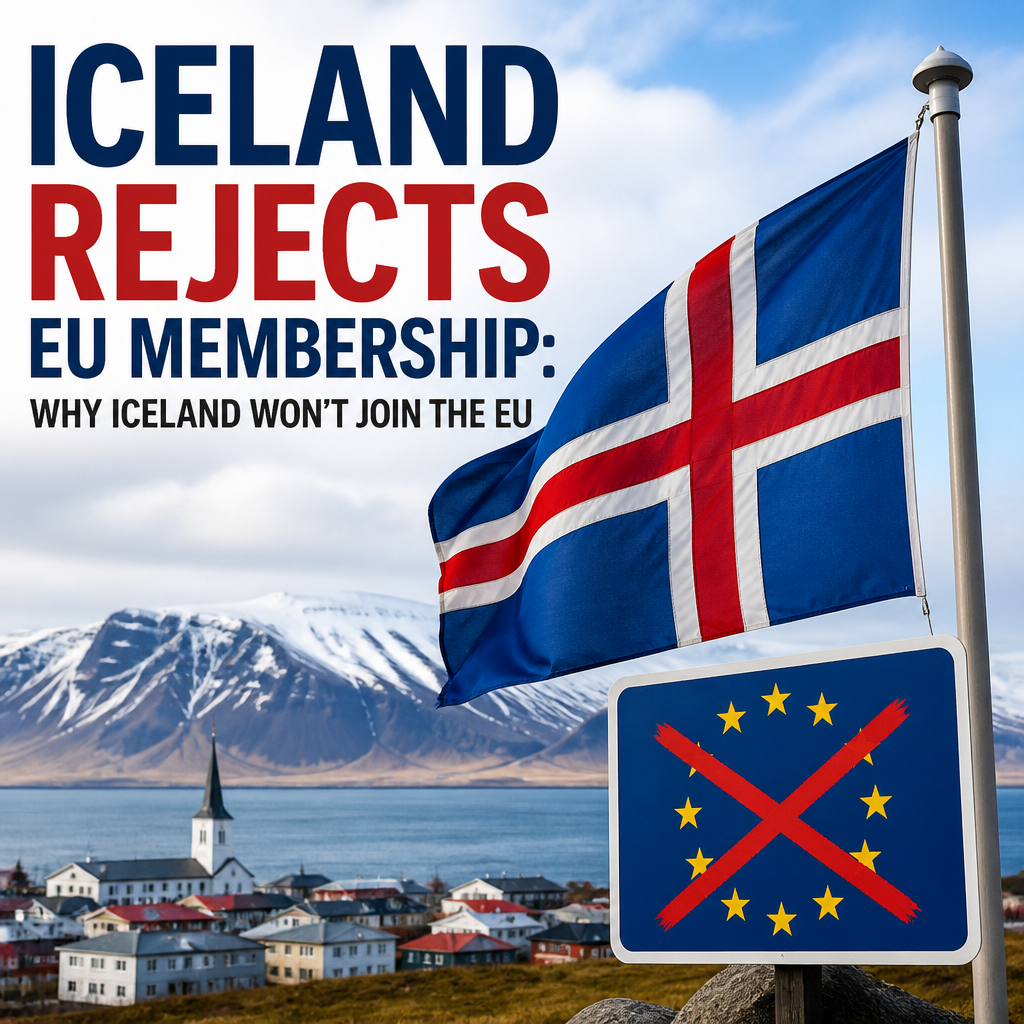
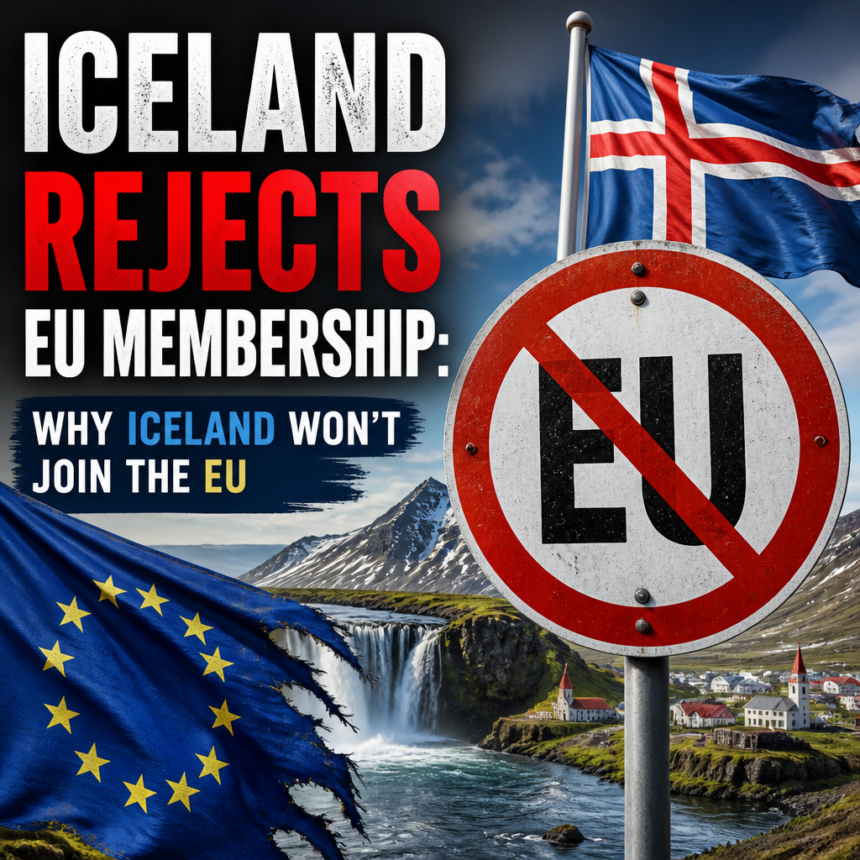
Iceland has made a clear choice to reject EU membership, prioritizing its economic independence and control over vital fishing rights. This decision highlights why Iceland values its unique sovereignty over becoming an EU member.
## Iceland Rejects EU Membership: What It Means for the Island Nation

In recent years, the question of whether Iceland should become an EU member has sparked considerable debate both domestically and internationally. Despite several rounds of discussions and negotiations, Iceland has ultimately chosen to reject membership in the European Union. This decision reflects a mix of economic, political, and cultural factors that shape Iceland's unique position in Europe and the wider world.

Background: Iceland and the EU


Iceland is a Nordic island country located in the North Atlantic with a population of roughly 370,000. While Iceland is not an EU member, it is closely linked to the union through agreements like the European Economic Area (EEA), which gives it access to the EU's single market.

Iceland officially applied for EU membership in 2009, following the financial crisis that hit the country hard. This application signaled significant public and political interest in deeper EU integration to stabilize the economy and attract investment. However, over time, public opinion shifted, and key concerns arose regarding sovereignty, fishing rights, and economic independence.

Reasons Why Iceland Rejects EU Membership


Several compelling reasons explain why Iceland has decided to reject joining the EU despite the potential advantages of membership:

1. Protection of Fishing Rights


Iceland's economy has a strong reliance on fisheries, which constitute a major export sector and a source of income for many coastal communities. The EU's Common Fisheries Policy (CFP) imposes quotas and shared access to national waters among member states.

- Iceland fears losing control over its valuable fish stocks.
- Maintaining sovereignty over fishing grounds is a matter of national pride and economic survival.

2. Economic Independence


Though Iceland benefited from the EU's single market via the EEA agreement, full EU membership would require adopting the euro as currency, which many Icelanders oppose.

- Iceland currently uses the Icelandic króna, which allows for monetary policy tailored to its specific economic needs.
- Joining the eurozone would mean ceding control of monetary policy to the European Central Bank, which might not align with Iceland’s interests.

3. Political and Cultural Sovereignty


Many Icelanders value their country's independence and political autonomy.

- Joining the EU would mean conforming to a wide range of common laws and regulations.
- There is a cultural emphasis on maintaining Iceland’s distinct identity, which some perceive EU membership might dilute.

The Impact of Rejecting EU Membership


By rejecting EU membership, Iceland is choosing to maintain a path of selective engagement with Europe rather than full integration.

Continued Cooperation Without Full Membership


- Iceland will likely continue leveraging agreements like the EEA to benefit from the European single market.
- Cooperation in sectors like trade, research, and environmental protection will persist.

Potential Challenges


- Without the political clout of EU membership, Iceland might face difficulties influencing EU policies that affect it.
- Trade barriers and regulatory divergences could grow if EU legislation changes without Iceland’s direct input.

What Comes Next for Iceland and the EU?


The decision by Iceland to reject EU membership does not mean the end of its relationship with Europe. Instead, it reinforces Iceland’s stance on maintaining flexibility and control over key national interests.

- Iceland continues to explore partnerships and cooperation agreements.
- The EU remains an important economic and political partner, but Iceland’s choice highlights a broader trend of nations balancing sovereignty with globalization.

Conclusion: A Thoughtful Rejection


Iceland’s decision to reject becoming an EU member underscores the country’s commitment to preserving its economic autonomy, political sovereignty, and national identity. While the EU offers various benefits, Iceland’s unique circumstances, especially its dependence on fisheries and preference for monetary independence, make full membership an unattractive proposition for many.

By navigating this carefully, Iceland aims to safeguard its future while maintaining strong links to Europe and the global community.

---

Keywords: iceland, eu, member, reject